Things to Do in Manama
Pearl divers' island turned neon skyline, still whispering dates and diesel
Top Things to Do in Manama
Find activities and tours you'll actually want to do. Book through our partners -- no booking fees.


Plan Your Trip
Essential guides for timing and budgeting
Climate Guide
Best times to visit based on weather and events
View guide →Day Trips
The best excursions and nearby destinations worth the journey
Explore day trips →Where to Stay
Best neighbourhoods, hotel picks, and booking tips
Find hotels →Travel Insurance
What's required, what coverage matters, and how to get a quote
Read guide →What to Pack
Climate-specific gear, essentials, and what to leave at home
See packing list →When Should You Visit Manama?
Tap a month for weather, crowds, and highlights
View full year-round climate guide →Your Guide to Manama
About Manama
Manama greets you with diesel and cardamom. The scent slaps you on the jet-bridge: engine oil from the port collides with sweet smoke curling from muhannad coffee stalls beside the arrivals gate. Walk past the mirrored towers of the Diplomatic Area at 4 p.m. and the heat feels liquid, even in March. By the time you reach Bab Al Bahrain, the old sea-gate of the souq, the air is thick with frankincense and the low hum of bargaining.
Inside the covered lanes, 500 fils (USD 1.30) buys a tin kettle of fresh karak chai delivered in a paper cup so hot it nearly burns your palms. A block west, the Bahrain National Museum rises like white coral from the Corniche. Its air-conditioning is so fierce you will need the sweater you packed "just in case." The city never apologizes for its contrasts: half-empty five-star hotels advertise rooftop brunches at 25 BHD (USD 66) while families picnic on the public beaches of Reef Island, grilling kebabs bought for 1.5 BHD (USD 4) from a kiosk that also sells knock-off Ray-Bans.
At night, Juffair's bar strip sounds like a pan-Arabic karaoke contest, loud, proud, occasionally off-key, yet ten minutes away the call to prayer from Al Fateh Grand Mosque still drowns out the bass. Manama rewards the curious. Ignore the polished brochures and you will discover why half the expats who planned a two-year posting are still here after twenty.
Travel Tips
Transportation: Taxis from Bahrain International Airport quote 7, 8 BHD (USD 18, 21) to Juffair. The public Bus A1, however, costs 300 fils (USD 0.80) and drops you opposite City Centre Mall in 45 minutes. Download the "Careem" app, think Uber with Arabic fonts, before landing. Rides within the capital rarely exceed 3 BHD (USD 8) except during Friday prayers when demand surges and drivers vanish. Avoid the 6, 7 p.m. shift change. You will stand on the curb while half the city's cabs display "OFF DUTY."
Money: ATMs give BHD and USD, but most souq stalls prefer cash in dinars. A 1 BHD note feels like play money, until you realize it is USD 2.65. Large hotels and malls accept cards. Yet the samosa guy outside Isa Town's Friday market won't. Exchange houses near Bab Al Bahrain usually beat airport rates by 2, 3 %. Tip 10 % in restaurants. Nothing for street chai, though rounding up to the next 100 fils keeps the queue moving.
Cultural Respect: Short sleeves are fine. But skip the sleeveless top in government buildings. Mosques lend abayas at the door. Yet bringing your own scarf speeds entry. Friday sermons in Al Fateh can draw 7,000 worshippers. Tourists are welcome after 2 p.m., shoes off, voices low. In cafés, a half-moon gesture over your cup tells the waiter you are finished. Otherwise the refills keep coming and so does the bill.
Food Safety: Dip into the alley behind Manama Souq for 500 fils (USD 1.30) shawarma carved from a spinning spit you can smell from Bab Al Bahrain. The oil is hot, the line is local, the turnover fast, three good signs. Bottled water is 300 fils everywhere. Buy it, because tap water is desalinated and tastes faintly metallic. Avoid salads at open-air stalls in July. The heat wilts lettuce into a bacterial playground. In Ramadan, eating on the street between sunrise and sunset is technically illegal, hotel lobbies are the polite loophole.
When to Visit
January feels like Madrid in April: 21 °C (70 °F) days, 15 °C (59 °F) nights, and hotel prices 10 % above annual average. February warms slightly; Formula One race week (end of Feb or early March) spikes rates 40 % and books all rooms south of Seef. March to May slides from 25 °C (77 °F) to 33 °C (91 °F) with low humidity and almost no rain, arguably the sweet spot.
June arrives like a hair-dryer: 39 °C (102 °F) and 70 % humidity that does not quit until October. July and August push 42 °C (108 °F); hotel prices drop 30 %, but you will pay it back in air-con bills and bottled water. Ramadan dates shift annually, expect quiet days, lively nights, and restaurants shuttered until iftar; non-Muslims can still eat in hotel restaurants behind screens.
September starts to cool to 34 °C (93 °F) but the humidity lingers; October is the locals' favorite month, 28 °C (82 °F), clear skies, and hotel prices dip another 15 %. November brings 24 °C (75 °F) and the first proper breeze. Beach clubs reopen and weekend brunches resume outdoors. December nights can dip to 16 °C (61 °F), good for wandering the National Theatre's Christmas market.
But expect 20 % New Year surcharges and fireworks over the Corniche that light up the whole bay.
Frequently Asked Questions
What Is the Bahrain World Trade Center?
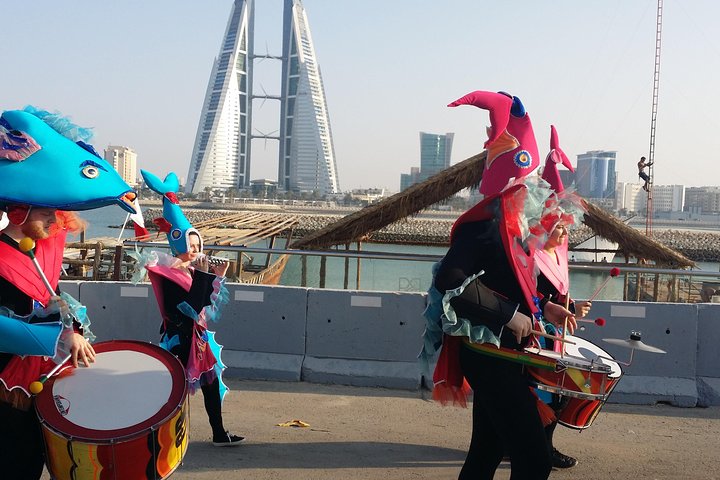
The Bahrain World Trade Center is a landmark twin-tower complex in Manama's central business district, notable for being the world's first skyscraper to integrate wind turbines into its design. Completed in 2008, the 240-meter towers feature three horizontal-axis turbines suspended between them that generate a portion of the building's power. You can't tour the turbines themselves. But the towers are visible from most parts of central Manama and make for striking photos, at night when they're lit up.
What Is the Bahrain National Museum?
The Bahrain National Museum in Manama is the country's largest and oldest museum, covering 6,000 years of the island's history from ancient Dilmun civilization through the Islamic era. The collection includes Dilmun burial mounds artifacts, traditional pearl-diving exhibits, and recreations of historic souqs. Entry is 1 BHD (about $2.65), it's closed Mondays, and you'll want at least 90 minutes to see the main galleries properly.
Where Can I Find Events Happening Near Me in Manama?
For current events in Manama, check the Bahrain Tourism & Exhibitions Authority's official calendar, the TimeOut Bahrain website, or the Visit Bahrain app, which all list concerts, exhibitions, festivals, and cultural happenings with dates and venues. Most major events happen at Bahrain International Circuit, Bahrain National Theatre, or the Exhibition World Bahrain. During cooler months (November, March), outdoor festivals and food markets are common in areas like Adliya and Block 338.
What Was the Husa & Zeyada Event at Good Neighbour in Manama?
Husa & Zeyada was a music event held at Good Neighbour, a cultural venue in Manama's Adliya neighborhood known for hosting live performances and community gatherings. Good Neighbour frequently features local and regional artists, DJ sets, and pop-up markets, typically on weekends. For upcoming events, check their Instagram (@goodneighbour.bh) or the TimeOut Bahrain events calendar, as schedules change monthly.
Is Manama Safe for Tourists?
Manama is generally very safe for tourists, with low violent crime rates and a visible police presence in commercial and tourist areas. Women can walk around independently, though modest dress (covering shoulders and knees) is respectful outside beach resorts. Petty theft is rare. But use standard precautions with valuables in crowded souqs. The biggest safety consideration is traffic, crossing streets requires caution, as drivers don't always yield to pedestrians.
How Much Does a Taxi Cost in Manama?
Official metered taxis in Manama start at 1 BHD (about $2.65), with rates around 0.25, 0.30 BHD per kilometer. A ride from the airport to central Manama typically runs 3, 4 BHD, while crossing the city center is usually 2, 3 BHD. Apps like Careem and Talabat Go offer fixed-price rides that are often cheaper than street taxis, and you can pay by card.
What Should I Wear in Manama?
Manama is more liberal than some Gulf capitals. But modest clothing is respectful, outside malls and beach clubs. For men, shorts and T-shirts are fine. For women, covering shoulders and knees is advisable in public spaces, though sleeveless tops are common in hotels and restaurants. Beachwear stays at the beach or pool. In mosques, women must cover hair, arms, and legs, and both sexes remove shoes.
When Is the Best Time to Visit Manama?
November through March is the best time to visit Manama, with daytime temperatures between 20, 26°C (68, 79°F) and pleasant evenings good for walking around the souqs or sitting at outdoor cafes. April and October are transitional, still manageable but warming up. June through September is extremely hot (often 38, 42°C / 100, 108°F) with high humidity, though indoor attractions, malls, and beaches remain open year-round.
Do I Need a Visa to Visit Bahrain?
Citizens of the US, UK, EU, Canada, Australia, and about 70 other countries can get a visa on arrival at Bahrain International Airport for 14 BHD (around $37), valid for two weeks. E-visas are also available online before travel through the Bahrain eVisa portal. Some nationalities need to arrange visas in advance through a Bahraini embassy. Check the official Bahrain tourism website for your specific country's requirements.
What Is Manama Souq Known For?
Manama Souq (also called Bab Al Bahrain Souq) is the city's historic marketplace, known for traditional textiles, spices, incense, and gold jewelry sold by weight. The gold souq in particular offers 18K and 22K pieces at competitive prices, with shops concentrated along Gold City Road. Bargaining is expected, start at about 60% of the asking price. The souq is busiest Thursday and Friday evenings when locals shop for the weekend.
More Ways to Experience Manama
Tours, day trips, and local experiences curated by on-the-ground operators.
Didn't see anything interesting yet?
Browse Viator's full catalog of tours, day trips, food experiences, and private guides in Manama.
See All Manama Tours on Viator